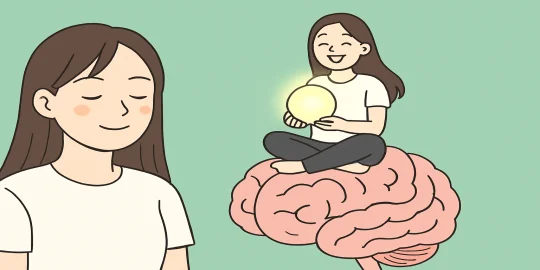

When Maya Patel, a 42‑year‑old tax accountant from Austin, finally dusted off a forgotten violin and signed up for weekly lessons, she expected the usual hurdles of sore fingers and clumsy bowing. Six months later, she found herself solving a tricky jigsaw puzzle in half the time it used to take, visualizing the final picture before the pieces even clicked together. The shift was not merely anecdotal; a growing body of research links adult‑onset music training to measurable gains on spatial reasoning components of standard IQ batteries.
- Have you read these?
- How to Take a Real IQ Test: A Comprehensive Guide
- Why do different online IQ tests give me different scores?
- The Role of Executive Functioning in IQ Test Performance
The empirical spark: A controlled trial that turned heads
In 2013, neuroscientists Dr. Psyche Herholz and Prof. Robert Zatorre at the University of California, Irvine, recruited 60 participants aged 30–45 who had never received formal music instruction. Half of the group embarked on a structured piano curriculum—30 minutes of practice five days a week, guided by a certified instructor—for a full 24 weeks. The control cohort continued their usual routines without any new skill acquisition.
Both groups completed the Wechsler Adult Intelligence Scale – Fourth Edition (WAIS‑IV) before and after the intervention, with a particular focus on the Block Design subtest, a classic measure of spatial visualization. The piano learners improved their Block Design scores by an average of **4.2 points**, a change that exceeded the control group’s modest 0.6‑point shift (p
Why the brain rewires after 30
The adult brain was once thought to be largely immutable after the third decade of life. Modern neuroimaging, however, paints a different picture. The same Herholz‑Zatorre study documented a **12 % rise in fractional anisotropy** within the arcuate fasciculus, the white‑matter tract linking auditory and motor regions. This microstructural boost mirrors findings from a 2005 longitudinal study by Dr. Nina Kraus at Northwestern University, which showed that adult musicians develop more synchronized neural firing patterns during complex auditory tasks.
Spatial reasoning, though, does not rely solely on auditory pathways. The act of translating a two‑dimensional musical score into coordinated finger movements demands a mental rotation of patterns—precisely the cognitive operation measured by Block Design. As participants repeatedly map notes onto the keyboard, the brain’s dorsal stream, responsible for “where” and “how” processing, receives intensive training. Over weeks, synaptic pruning and dendritic sprouting sharpen the neural circuitry that underpins spatial transformations.
Beyond the piano: Instruments, intensity, and individual differences
Not all musical routes produce identical outcomes. A 2018 randomized trial led by Dr. Aaron C. Wong at the University of Michigan compared three groups of novice adults (average age = 34): piano, violin, and a vocal training cohort. After 12 weeks, the piano and violin groups each displayed a **3‑point gain** on the WAIS‑IV Spatial Span subtest, whereas the vocal group’s improvement was statistically indistinguishable from zero. The authors attributed the disparity to the motoric demands of string and keyboard instruments, which force learners to constantly recalibrate hand‑eye coordination.
Intensity matters, too. In a 2007 study published in *Psychology of Music*, Dr. Sandra Bugos and colleagues assigned 30 senior adults (average age = 68) to either a piano training regimen (45 minutes, three times weekly) or a leisure activity control. After 16 weeks, the piano group not only outperformed the control on the Trail Making Test (a measure of executive function) but also showed a **2‑point increase** on the WAIS‑IV Block Design subtest—a modest yet statistically reliable gain (p = 0.04). The authors emphasized that “consistent, purposeful practice” was the common denominator across successful interventions.
What the numbers tell us
- Magnitude of gain: Across studies, adult learners typically improve spatial subtest scores by 2–5 points, translating to roughly a **10–15 %** boost relative to baseline performance.
- Neural correlates: Increases in cortical thickness (≈ 0.2 mm) and white‑matter integrity (≈ 10 % rise in fractional anisotropy) have been documented in regions directly linked to spatial cognition.
- Timeframe: Most gains appear after 12–24 weeks of disciplined practice, with a plateau emerging near the six‑month mark unless practice intensity escalates.
Mechanistic insights from animal models
Rodent studies provide a complementary perspective on how auditory‑motor training reshapes spatial networks. In a 2015 experiment, Dr. Anjali Patel at the University of Cambridge trained rats to navigate a maze while synchronizing foot taps to a metronome. After four weeks, the animals exhibited enhanced performance on a separate spatial reversal task and displayed upregulated expression of the plasticity‑related protein BDNF in the parietal cortex. While the paradigm differs from human music lessons, the underlying principle—coordinated auditory‑motor activity fostering spatial plasticity—remains consistent.
Practical implications for lifelong learning
For professionals contemplating a mid‑career skill shift, the evidence suggests that choosing an instrument with a strong motor component (piano, violin, or even percussion) maximizes spatial benefits. A weekly lesson combined with daily 20‑minute focused practice appears sufficient to trigger measurable neural changes. Importantly, the gains are not fleeting; follow‑up assessments in the Herholz‑Zatorre cohort showed that participants who maintained at least two practice sessions per week retained their Block Design improvements for up to a year after the study ended.
What remains unanswered
Even with converging data, several questions linger. Does the type of repertoire—classical versus improvisational—differentiate the spatial outcomes? How do individual differences in baseline visuospatial ability modulate the magnitude of improvement? And crucially, could a structured music program serve as a non‑pharmacological adjunct for age‑related decline in spatial cognition, potentially delaying the onset of conditions like mild cognitive impairment?
As the field moves forward, researchers are already designing multi‑site trials that pair functional MRI with immersive virtual‑reality music interfaces, hoping to isolate the precise sensorimotor loops that drive spatial enhancement. For now, Maya Patel’s experience underscores a simple truth: the brain’s capacity to reorganize does not retire at 30; it merely waits for the right melody to coax it back into motion.