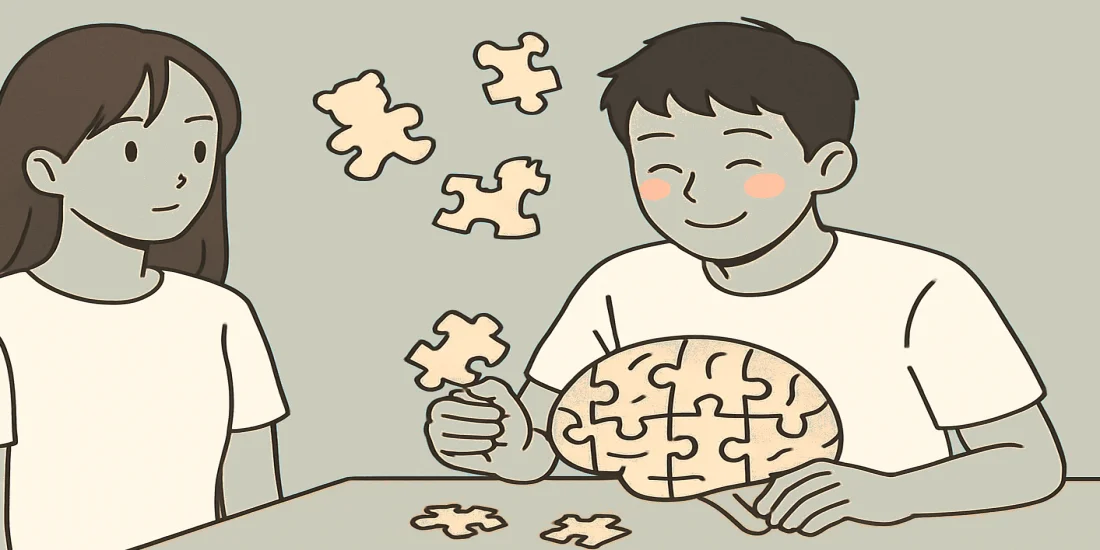

When Melissa entered the room for her IQ test, she felt a flood of emotions that had nothing to do with logic puzzles or verbal reasoning. For Melissa, who grew up in a turbulent household where emotional and physical neglect were frequent, the sterile testing environment triggered a cascade of stress responses that were as familiar as they were overwhelming. Such environments, reminiscent of her childhood experiences of being judged and found wanting, can derail one's ability to perform at their best, raising questions about the validity of IQ tests in individuals with traumatic pasts.
- Have you read these?
- IQ variations across time, race, and nationality: An artifact of differences in ...
- What are the levels of IQ test?
- The Evolution of IQ Testing: From Binet to AI-Driven Assessments
IQ testing, developed in the early 20th century, has long been hailed as a measure of cognitive ability. However, emerging discussions among psychologists and neuroscientists are challenging the assumption that IQ scores are stable indicators of innate intelligence. A significant aspect of this debate centers on the impact of childhood trauma—an often invisible burden that can skew test results and misrepresent an individual's true cognitive capabilities.
The Neuroscience of Trauma
Trauma leaves a mark on the brain, a fact that neuroscientists have long been aware of. A study led by Dr. Martin Teicher at Harvard University in 2012 used MRI scans to demonstrate that childhood abuse can cause notable changes in brain structure. The research showed that trauma can alter the connectivity between neurons, particularly in regions associated with memory and executive function. This alteration can lead to difficulties in attention, problem-solving, and emotional regulation—all crucial for performing well on IQ tests.
One of the most affected areas is the prefrontal cortex, the brain's command center for decision-making and complex cognitive behavior. Trauma-induced changes in this region could result in a diminished ability to focus and process information rapidly, impairing the very skills IQ tests are designed to measure. This raises an important question: are we measuring intelligence, or are we merely capturing the scars of past trauma?
Stress, Cortisol, and Cognitive Performance
For individuals like Melissa, the stress response triggered by testing environments can be particularly intense. Stress is known to elevate levels of cortisol, a hormone that, in high quantities, can impair cognitive functions. Research conducted by Dr. Bruce McEwen at Rockefeller University has illustrated how chronic stress can shrink the hippocampus, a brain structure critical for learning and memory.
This stress-cortisol connection presents a dilemma. If a traumatic background predisposes someone to heightened stress responses, their performance on tests requiring calm concentration is likely compromised. This isn't just a theoretical concern. A study in 2010 by the University of Wisconsin-Madison found that children from high-stress backgrounds performed worse on working memory tasks, an essential component of IQ tests.
Case Studies: Real Lives, Real Impact
Consider the story of Jake, who, after experiencing years of emotional neglect, was labeled as having a "below average" IQ in school. It wasn't until he was introduced to art therapy that his exceptional creativity and problem-solving abilities became apparent. Jake's case is not unique. There is a growing recognition that traditional IQ tests may fail to capture the diverse ways intelligence can manifest, particularly in those who have developed unique coping mechanisms in response to adversity.
Another remarkable example is that of Tara, who was raised in an environment of domestic violence. Despite scoring poorly on standardized intelligence tests, Tara excelled in real-world problem-solving and street smarts, skills honed from navigating her challenging home life. These stories illustrate a broader truth: intelligence is multifaceted, and trauma can obscure or distort its measurement.
Rethinking Intelligence Assessment
Given these complexities, some researchers are advocating for a more holistic approach to assessing intelligence. Dr. Robert Sternberg, a prominent psychologist, has long argued for a broader definition of intelligence that includes creative and practical skills. In his view, traditional IQ tests are limited because they focus narrowly on analytical abilities while neglecting other forms of intelligence that may be equally important.
This perspective is gaining traction as educators and policymakers seek to better understand and support individuals with diverse cognitive profiles. Schools in some areas are beginning to incorporate assessments that account for emotional intelligence and resilience, recognizing that these skills are crucial for both personal and professional success.
The Future of IQ Testing
As we continue to uncover the profound ways in which childhood trauma affects cognitive development, it becomes clear that our methods of assessing intelligence need to evolve. New testing paradigms that account for emotional and environmental factors are essential for a more accurate and fair evaluation of an individual's cognitive abilities.
One promising approach involves integrating neuropsychological assessments that consider the effects of trauma on brain function. These tests can provide a more comprehensive view of an individual's cognitive strengths and weaknesses, offering insights that traditional IQ tests might miss. Additionally, advancements in neuroimaging technology could one day allow us to directly observe how trauma impacts brain activity during testing, paving the way for more tailored interventions and support.
A Complex Puzzle
The relationship between childhood trauma and adult IQ test results is a complex puzzle, one that challenges our understanding of intelligence itself. While IQ tests have served as a benchmark for cognitive assessment for over a century, their limitations are becoming increasingly apparent. For those affected by trauma, these tests may not truly reflect their intellectual potential.
Perhaps the most thought-provoking insight is this: intelligence is not a fixed trait but a dynamic interplay of genetic, environmental, and emotional factors. As we deepen our understanding of this interplay, we may find that the true measure of intelligence lies not in a score, but in the resilience and adaptability of the human spirit.