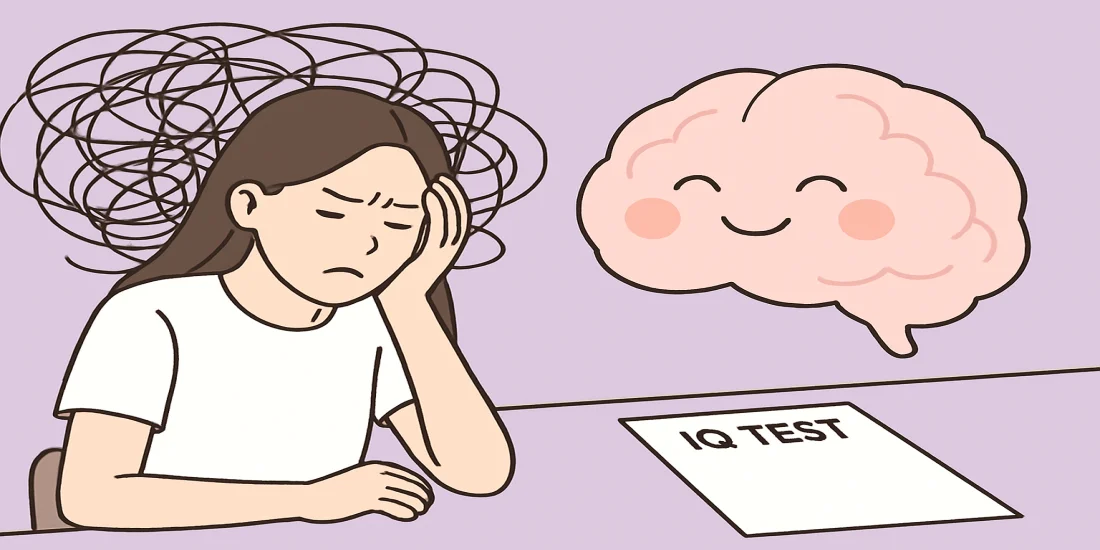

In the bustling city of Tokyo, a group of university students participated in a study that seemed to defy logic. Conducted by Dr. Hiroshi Shimizu in 2020, the research aimed to explore how stress, a ubiquitous companion in our fast-paced lives, influences something as seemingly static as IQ test performance. The findings were startling: participants who reported high stress levels scored an average of 12 points lower on standardized IQ tests compared to their less-stressed peers.
- Have you read these?
- What IQ is a genius?
- Why the Color Temperature of Your Study Light Affects IQ Test Scores
- Why Cryptic Crossword Enthusiasts Excel in Verbal Analogy Subtests of IQ Exams
This phenomenon isn't just a quirk observed in a single study. The relationship between stress and cognitive performance, particularly in the context of IQ testing, has been a subject of scientific scrutiny for decades. But why does stress have such a profound impact on our cognitive abilities?
The Science of Stress and Cognition
Stress, in its essence, is a biological response to perceived threats or challenges. It triggers the release of hormones like cortisol and adrenaline, which prepare the body for a 'fight or flight' reaction. While this response can be life-saving in dangerous situations, chronic stress can wreak havoc on the brain, particularly in areas responsible for memory and executive function.
Dr. Robert Sapolsky, a neuroscientist at Stanford University, has extensively studied the impact of stress on the brain. His research highlights how prolonged exposure to stress hormones can lead to structural changes in the hippocampus, the brain region critical for memory formation and recall. This is particularly relevant for IQ tests, which often assess memory and problem-solving skills.
Case Study: Stress in the Classroom
Consider the case of a high school in Chicago where students were preparing for the state-mandated IQ assessments. Teachers noticed that students from economically disadvantaged backgrounds consistently scored lower than their peers. Upon further investigation, it became evident that these students experienced higher levels of stress, stemming from financial instability and family pressures.
To address this, the school implemented a program incorporating mindfulness and stress-reduction techniques. Remarkably, within a year, the gap in test scores between the stressed and non-stressed students narrowed significantly, suggesting that mitigating stress could enhance cognitive performance.
IQ Tests: More Than Just Numbers
IQ tests, originally designed to measure intellectual potential, have evolved into tools that assess a wide array of cognitive abilities. However, they are inherently susceptible to external factors, with stress being a notable influencer. The variability in test results due to stress raises questions about the validity of IQ tests as definitive measures of intelligence.
Dr. Angela Duckworth, a psychologist at the University of Pennsylvania, posits that factors like grit and emotional resilience play a crucial role in cognitive assessments. Her studies suggest that individuals with higher resilience tend to perform better on IQ tests, regardless of their baseline cognitive abilities. This indicates that stress management, rather than raw intelligence, might be a key determinant of IQ test outcomes.
Exploring the Biological Mechanisms
The biological underpinnings of stress-induced cognitive impairment are complex. Researchers at the University of California, Berkeley, have identified how stress affects synaptic plasticity, the brain's ability to adapt and reorganize itself. Stress hormones can dampen synaptic plasticity, leading to decreased cognitive flexibility and impaired learning — both critical components of IQ assessments.
Moreover, stress can disrupt the prefrontal cortex, the brain area involved in decision-making and problem-solving. This disruption can hinder an individual's ability to focus, process information, and think critically during an IQ test, further explaining the observed drop in scores under stress.
The Emotional Component: Anxiety and IQ Performance
Anxiety, a common manifestation of stress, can exacerbate its effects on cognitive performance. Dr. Wendy Suzuki, a neuroscientist at New York University, emphasizes the role of anxiety in narrowing focus and limiting creative problem-solving. Her research demonstrates that moderate stress can enhance cognitive performance by sharpening focus, but excessive anxiety can lead to cognitive overload and decreased performance.
This nuanced relationship suggests that while some level of stress might be beneficial in keeping individuals engaged, it's a delicate balance. Crossing the threshold into high anxiety can be detrimental, particularly in high-stakes testing scenarios.
Future Directions: Rethinking IQ Assessments
The impact of stress on IQ test performance prompts a reconsideration of how these assessments are designed and interpreted. If stress significantly influences outcomes, are we truly measuring innate intelligence, or are we capturing a transient state of cognitive functioning?
Future research may explore adaptive testing environments that account for stress levels, offering a more holistic view of an individual's cognitive abilities. Additionally, integrating stress-management strategies into educational settings could level the playing field, ensuring that IQ assessments reflect true intellectual potential rather than situational stressors.
As we continue to unravel the intricate dance between stress and cognition, one thing is clear: our understanding of intelligence is expanding beyond static scores and into the dynamic interplay of biology, environment, and emotion. This insight challenges us to rethink not just how we measure intelligence, but how we nurture it in a world where stress is a constant companion.