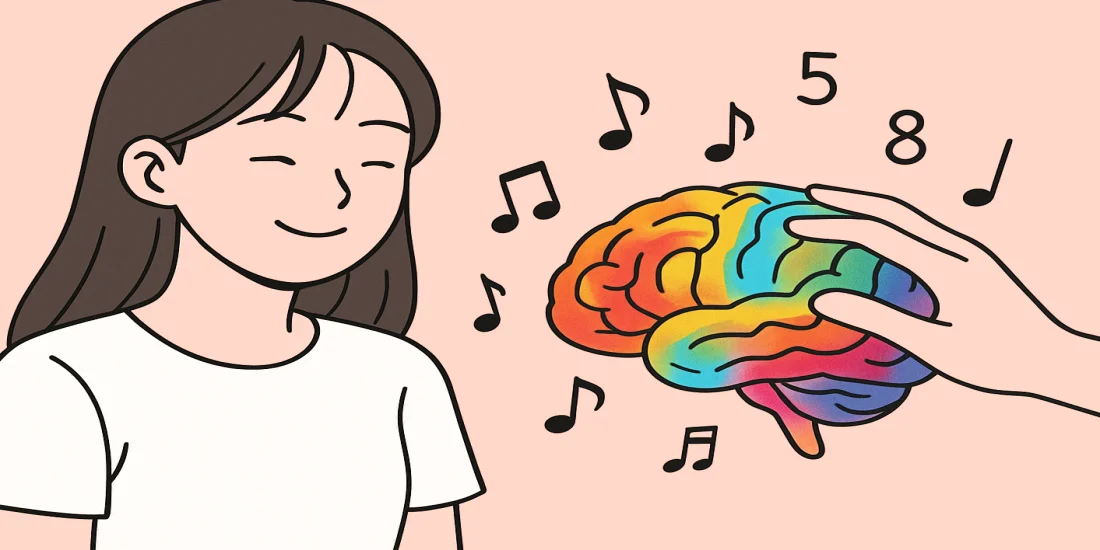

Imagine hearing a symphony and simultaneously seeing a cascade of colors dance before your eyes. For some, this is not the result of an overactive imagination but a daily reality. Synesthesia, a condition where one sensory experience involuntarily triggers another, offers a unique lens into human cognition. While it might seem purely esoteric, synesthesia has captured the interest of neuroscientists and psychologists for its intriguing correlation with higher IQ scores.
- Have you read these?
- How Framing Photographs Enhances Spatial IQ: The Surprising Cognitive Benefits o...
- What is a Spatial IQ test?
- Why Cryptic Crossword Enthusiasts Excel in Verbal Analogy Subtests of IQ Exams
In 2006, Simon Baron-Cohen and his colleagues at the University of Cambridge conducted a study involving 450 individuals, revealing that those with synesthesia were likely to score higher on IQ tests compared to non-synesthetes. The researchers found that, on average, synesthetes scored 12 points higher on standard IQ tests. This discovery has prompted further investigation into why this sensory crossover might correlate with enhanced intellectual capabilities.
The Neural Basis of Synesthesia
To understand this phenomenon, it is essential to delve into the brain's wiring. Synesthesia occurs when neural pathways in the brain cross-connect in ways that are atypical for most people. For instance, in grapheme-color synesthesia, one of the most common forms, individuals associate specific colors with letters or numbers. This results from increased connectivity between brain areas responsible for processing color and those involved in recognizing letters and numbers. A study from the Max Planck Institute for Psycholinguistics in 2011 used fMRI scans to show that synesthetes exhibited greater white matter connectivity, suggesting more robust information processing pathways.
These enhanced connections might not only facilitate the vivid experiences characteristic of synesthesia but could also contribute to more efficient cognitive processing. The brain of a synesthete is, in essence, a highly interconnected network, potentially offering advantages in problem-solving and creative thinking—skills frequently measured by IQ tests.
Creativity and Divergent Thinking
Beyond the structural peculiarities of a synesthete's brain, their cognitive style often reflects an ability to think outside the box. Studies have shown that synesthetes tend to excel in areas requiring creative and divergent thinking. A 2013 study by Dr. Julia Simner from the University of Sussex found that synesthetes scored significantly higher on tests designed to measure creativity. Participants were asked to generate as many uses as possible for everyday objects, such as a brick or a paperclip. Synesthetes consistently produced a greater number of unique responses.
This kind of divergent thinking is a key component of many IQ tests, particularly those assessing fluid intelligence—the capacity to solve novel problems. The synesthete's ability to form connections between seemingly disparate pieces of information mirrors the cognitive flexibility required for high-level problem solving.
Memory and Cognitive Mapping
Another domain where synesthetes often excel is memory. The vivid and unique sensory experiences that characterize synesthesia can serve as powerful mnemonic devices. For instance, a synesthete who associates numbers with colors might recall a phone number by visualizing a sequence of hues. This form of cognitive mapping can lead to enhanced recall and recognition, skills that are often reflected in higher verbal and working memory scores on IQ tests.
In 2010, a study led by Dr. David Brang at Stanford University explored the memory capabilities of synesthetes. The research demonstrated that synesthetes had superior recall abilities, particularly in tasks involving lists or sequences—a common component of IQ assessments.
The Genetic Puzzle
While synesthesia is not fully understood, genetic factors are believed to play a significant role. The condition often runs in families, suggesting a hereditary component. However, the exact genetic mechanisms remain elusive. Understanding these genetic underpinnings might not only explain synesthesia but also illuminate the broader links between genetics and intelligence.
Interestingly, some researchers propose that the genetic variations associated with synesthesia might confer broader cognitive benefits, possibly explaining the observed higher IQ scores. This hypothesis is supported by the observation that synesthesia often co-occurs with other cognitive traits, such as heightened pattern recognition and enhanced spatial awareness.
Challenges and Misconceptions
Despite these advantages, synesthesia is not without its challenges. Some synesthetes report feeling overwhelmed by sensory information, leading to difficulties in environments with excessive stimuli. Additionally, the condition can be misunderstood or dismissed as mere imagination by those unfamiliar with its scientific basis.
Moreover, while the correlation between synesthesia and higher IQ scores is compelling, it is crucial to approach these findings with caution. IQ tests are not infallible measures of intelligence and often fail to capture the full spectrum of human cognition. The relationship between synesthesia and intelligence is complex and multifaceted, shaped by a myriad of biological, environmental, and personal factors.
Unanswered Questions and Future Directions
As we continue to unravel the mysteries of the brain, synesthesia provides a fascinating case study in the diversity of human perception and cognition. Why do some individuals experience these extraordinary sensory crossovers while others do not? How do these experiences shape their intellectual and creative capacities? These questions remain at the forefront of neuroscientific research.
One intriguing avenue for future exploration is the potential application of synesthetic experiences to educational and cognitive enhancement practices. Could training in synesthetic techniques enhance memory or creativity in non-synesthetes? While speculative, such possibilities highlight the broader implications of understanding synesthesia beyond its immediate sensory manifestations.
In the realm of human cognition, synesthesia serves as a reminder of the brain's incredible plasticity and adaptability. While we may not fully grasp the intricacies of this condition, its study continues to challenge our understanding of perception and intelligence, inviting us to reconsider the boundaries of the human mind.