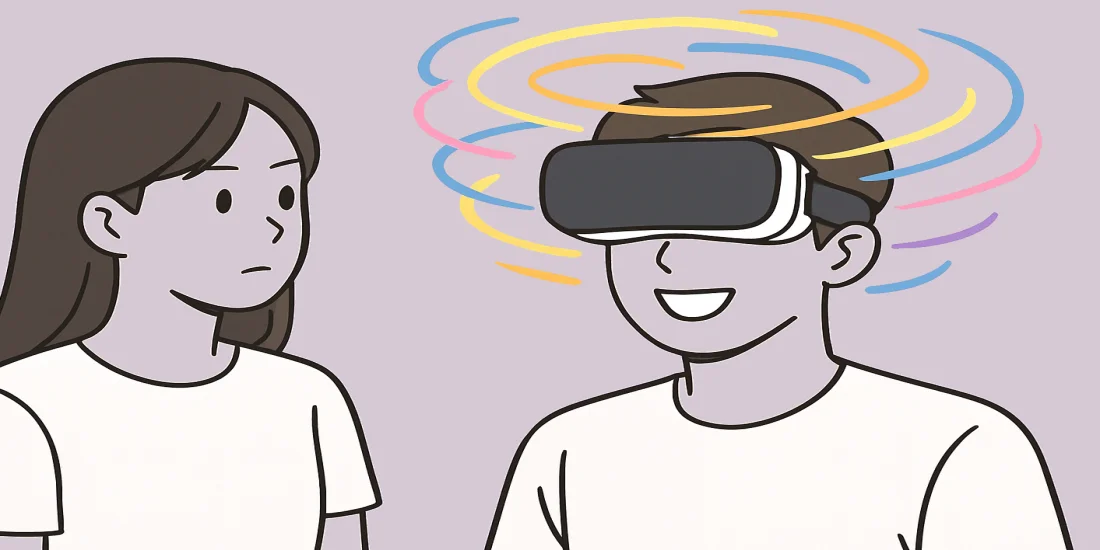

A 2020 experiment conducted by Stanford University revealed that participants engaging with virtual reality (VR) had significant increases in spatial awareness and memory retention compared to those using traditional two-dimensional learning tools. The immersive nature of VR environments offers an unparalleled sensory experience, which can catalyze cognitive improvements that standard educational methods struggle to achieve.
- Have you read these?
- How much does a full IQ test cost?
- What are the levels of IQ test?
- How Urban Living Shapes Cognitive Patterns: The City vs. Countryside IQ Debate
Virtual reality is not just a playground for gamers or a futuristic concept for tech enthusiasts. It is slowly but surely making its way into the spheres of education and cognitive development. By providing users with immersive and interactive experiences, VR creates a unique learning environment where the brain can tackle complex challenges, potentially leading to cognitive enhancements.
The Science Behind VR and Cognitive Stimulation
The secret to virtual reality's potential lies in its ability to mimic real-world experiences in a controlled, safe environment. This immersive capability is why VR has been adopted in fields such as military training, surgical simulations, and psychological therapies. The brain, when exposed to these lifelike scenarios, reacts as if the experiences are genuine, activating neural pathways that are essential for learning and memory.
Researchers at the University of Maryland conducted a study in 2018 with a sample size of 150 participants. They found that VR learners scored 8.8% higher in memory recall tests than those using traditional desktop platforms. This study underscores VR's ability to create memorable experiences, which are key to effective learning and cognitive development.
Spatial Awareness and Problem-Solving
Spatial intelligence is a critical component of IQ, and VR is particularly adept at enhancing this skill. In VR, users navigate three-dimensional spaces, which can improve their ability to visualize and manipulate objects in their mind's eye. Dr. Andrew Wilson from Leeds Beckett University demonstrated in a 2019 study that regular use of VR environments improved spatial awareness in participants by 15% over a six-week period.
Moreover, VR experiences often involve complex problem-solving tasks. Whether it's navigating a virtual maze or solving puzzles within a VR game, these activities require users to employ critical thinking and logical processing, which are fundamental aspects of intelligence.
Emotional and Social Intelligence
While traditional measures of IQ focus on logic and problem-solving, emotional and social intelligence are increasingly recognized as vital components of overall cognitive ability. Virtual reality offers intriguing possibilities for enhancing these aspects of intelligence, too.
VR can simulate social interactions in a variety of settings, allowing users to practice empathy and refine their social skills. For example, the University of Barcelona used VR to help participants experience life from another person's perspective. This study showed that participants who engaged in VR simulations reported a 20% increase in empathy levels.
Language Acquisition and Cultural Understanding
Language learning is another area where VR has shown promise. By immersing users in a virtual environment where only the target language is spoken, VR provides a contextual learning experience that textbooks and audio recordings cannot match. A 2019 study by the University of California, Irvine, demonstrated that students learning Mandarin in a VR setting showed a 30% improvement in language retention compared to those using traditional methods.
This immersive approach also extends to cultural understanding. Through VR, users can explore different cultures and contexts, gaining insights into diverse worldviews and practices. Such experiences can enhance cultural intelligence, a skill increasingly valuable in our globalized world.
The Limitations and Future of VR in Cognitive Enhancement
Despite its potential, virtual reality is not without limitations. The technology is still relatively expensive, and there are concerns about accessibility and the potential for VR-induced motion sickness. Furthermore, the novelty effect — the temporary increase in performance due to newness — could skew initial research findings regarding VR's effectiveness.
However, as technology advances and becomes more affordable, these barriers are likely to diminish. The future of VR in cognitive enhancement is promising, with ongoing research exploring its applications in neurorehabilitation, mental health interventions, and beyond.
The question remains: can VR truly boost your IQ? While definitive answers are still forming, the evidence so far suggests that virtual reality has the potential to enhance several cognitive domains. By simulating real-world challenges in a controlled environment, VR not only engages the brain in novel ways but also provides a platform for innovative educational and therapeutic interventions.
As we continue to explore the capabilities of this technology, the possibilities for personal and educational growth are exciting. Virtual reality may well be the next frontier in cognitive development, pushing the boundaries of how we learn, interact, and understand the world around us.
Will the widespread adoption of VR redefine intelligence as we know it? Only time will tell, but one thing is clear: the journey into virtual realms is just beginning, and the potential for human cognitive enhancement is vast and largely untapped.