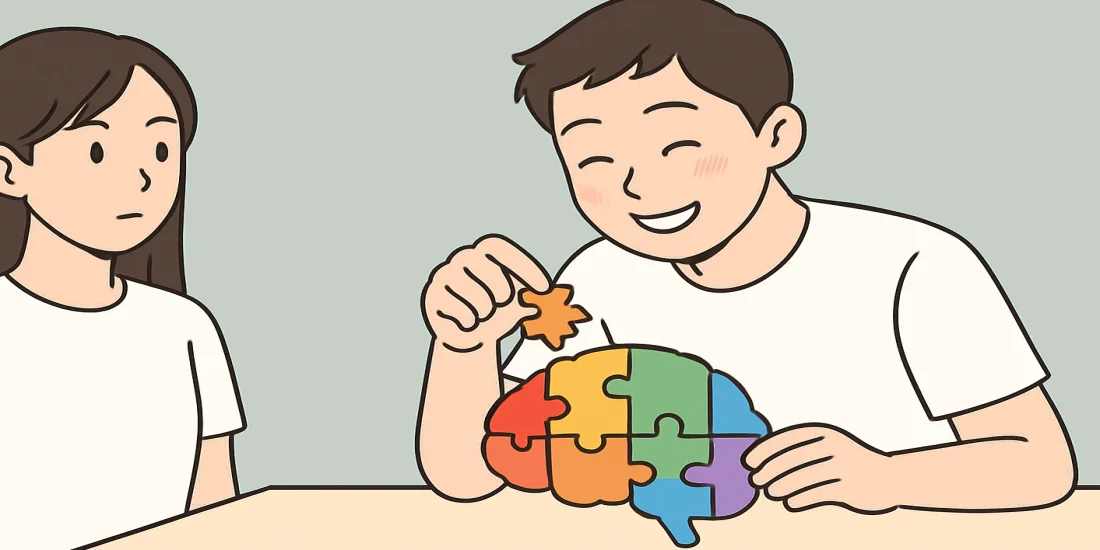

In 2003, a study led by researchers at the University of Toronto revealed that individuals who excel at solving jigsaw puzzles often employ spatial visualization strategies that correlate with higher IQ scores. This intriguing finding has sparked ongoing interest in the relationship between puzzle-solving techniques and cognitive performance, offering insights into how the brain navigates complex problems.
- Have you read these?
- How to test IQ level for adults?
- What is it like to have an extremely high IQ?
- How much does a full IQ test cost?
The way we approach puzzles can be as unique as our fingerprints. Some people dive right in, using intuition and pattern recognition to guide them. Others follow a more structured path, breaking down the puzzle into manageable parts. These approaches are not just trivial preferences; they may reflect underlying cognitive strategies that influence IQ test outcomes.
The Puzzle of Cognitive Strategies
One might wonder how a preference for puzzles like Sudoku or crosswords could be tied to intelligence. At the heart of this question lies the concept of cognitive strategies—systematic ways of thinking that individuals use to tackle problems. These strategies are not only essential for puzzle solving but are also indicative of how individuals perform on standardized intelligence assessments.
Research from Yale University in 2010 found that individuals who preferred strategy-based puzzles like chess or Go tended to score higher on IQ tests. This correlation was attributed to their ability to predict outcomes and manage complex rules, skills that are often assessed in IQ evaluations. The study involved 150 participants and revealed a notable pattern: those who excelled in strategy games often demonstrated superior problem-solving skills and logical reasoning abilities.
Visual vs. Analytical Approaches
When it comes to puzzles, approaches can broadly be categorized into visual and analytical strategies. Visual thinkers often excel in tasks requiring spatial awareness and pattern recognition. A 2015 study conducted by Stanford University highlighted that these individuals have heightened activity in the parietal lobe, a brain region associated with spatial processing. This might explain why visual thinkers are adept at puzzles like mazes and jigsaw puzzles, where visual-spatial skills are paramount.
Conversely, analytical thinkers rely on logical reasoning and step-by-step processing. They often shine in puzzles that require mathematical calculations or sequence identification. For instance, the same Stanford study observed that analytical thinkers displayed increased activity in the prefrontal cortex, the brain's center for complex cognitive behavior. This could account for their proficiency in puzzles like Sudoku or logic grids, where methodical thinking is key.
Case Study: The Rubik's Cube Phenomenon
The Rubik's Cube, a seemingly simple yet baffling puzzle, has captivated solvers worldwide since its inception in 1974. The strategies employed to solve this cube offer a window into the minds of those who excel at such tasks. "Speedcubers," individuals who can solve the cube in under 10 seconds, often use algorithms—a step-by-step procedure for calculations—to achieve their impressive times.
Consider the case of Feliks Zemdegs, a renowned speedcuber from Australia. Zemdegs' approach to solving the Rubik's Cube involves a combination of muscle memory and algorithmic proficiency. His ability to visualize the cube's movements and execute sequences rapidly demonstrates a dynamic interplay between spatial visualization and analytical thinking. This dual approach mirrors the cognitive demands of high IQ tasks, where both creative and logical thinking are essential.
Beyond the Cube: Broader Implications
The strategies used in puzzle-solving extend beyond games and into real-world applications. For instance, a study from the Massachusetts Institute of Technology (MIT) in 2017 explored how engineers and architects often employ spatial visualization skills honed through puzzles to design complex structures. This study, which surveyed 200 professionals, found that those who engaged in regular puzzle-solving activities demonstrated enhanced spatial reasoning and creativity in their work.
Moreover, in the realm of artificial intelligence, puzzle-solving strategies are being leveraged to improve machine learning algorithms. Researchers at Google DeepMind have incorporated pattern recognition techniques observed in human puzzle-solving to enhance AI capabilities in tasks like image recognition and autonomous navigation. The intersection of human cognitive strategies and AI development underscores the multifaceted value of understanding puzzle-solving approaches.
The Unsolved Mysteries of Puzzle-Solving
While the correlation between puzzle-solving styles and IQ test performance is compelling, it raises several questions. Do individuals naturally gravitate towards puzzles that align with their cognitive strengths, or does engaging in certain types of puzzles enhance specific cognitive abilities? The answer remains elusive, yet it prompts a broader exploration of how environmental factors and personal interests shape cognitive development.
Consider the role of cultural influences in puzzle preferences. A comparative study conducted by the University of Tokyo in 2012 revealed that cultural background significantly impacts puzzle selection and solving strategies. Japanese participants, for example, exhibited a preference for puzzles that emphasize harmony and balance, such as Sudoku, while Western participants leaned towards puzzles that highlight competitive elements, like chess.
Thoughts for the Future
As we continue to unravel the intricate connections between puzzle-solving and intelligence, one thing becomes clear: the way we tackle puzzles is a reflection of our cognitive landscape. It is a testament to the brain's remarkable capacity for adaptation and problem-solving. Whether we find ourselves drawn to the visual elegance of a jigsaw or the logical allure of a crossword, each puzzle offers a unique lens through which to view our mental faculties.
In a world increasingly driven by technology and data, the skills honed through traditional puzzle-solving remain relevant. They remind us of the value of patience, perseverance, and creativity—qualities that transcend the confines of any single test or assessment. As we ponder the countless puzzles yet to be solved, both in games and in life, we are left with a compelling question: How might our evolving understanding of cognitive strategies continue to shape the way we measure and nurture intelligence?