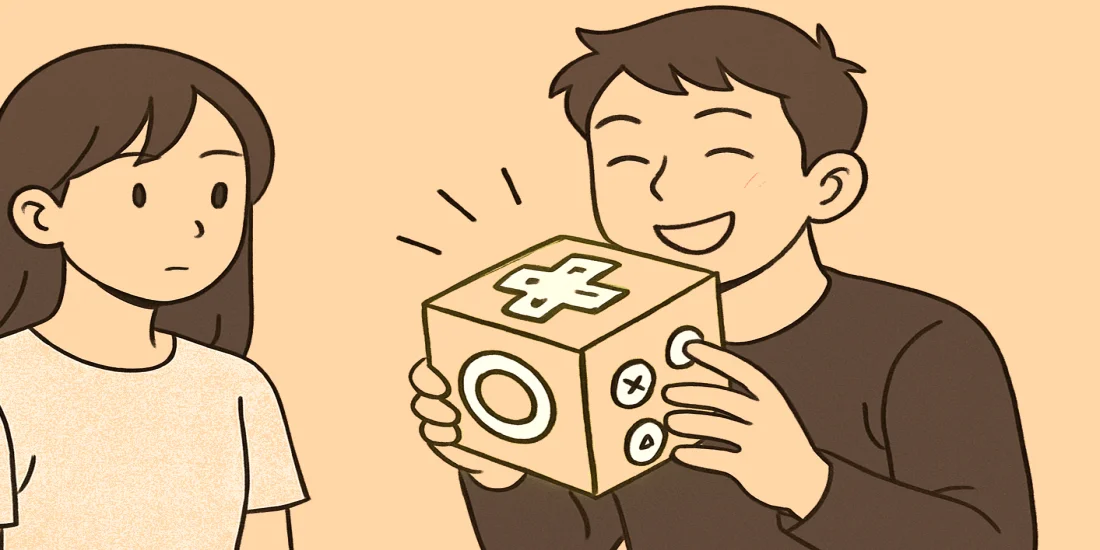

In 2015, neuroscientists at the University of California, Irvine, conducted a study that startled educators and parents alike: they found that regular players of action video games scored higher in areas associated with cognitive functions, such as perception, attention, and decision-making. This research involved 34 participants and highlighted a connection between gaming and enhanced mental capabilities that are often tested in traditional IQ assessments.
- Have you read these?
- Why are some people smarter than others?
- Why Adults Who Pick Up a Musical Instrument After 30 See Boosts in Spatial IQ Su...
- Is intelligence hereditary? Is IQ only about genes?
As we delve into the intricate interplay between video gaming and IQ test performance, it's fascinating to see how the skills honed in virtual worlds can translate into measurable cognitive abilities. From spatial awareness to strategic planning, video games cultivate a range of skills that are remarkably relevant to the tasks and challenges posed by IQ tests.
The Power of Spatial Awareness
Spatial awareness is a skill that video gamers often excel at, and it’s no coincidence that this is a critical component of many IQ tests. Puzzle games like Tetris and complex 3D environments in games such as Minecraft demand acute spatial reasoning. A 2014 study published in the journal Psychological Science found that gamers who regularly engaged with these types of games showed significant improvements in spatial visualization abilities.
Research at the Max Planck Institute for Human Development in Berlin revealed that playing Super Mario 64 for 30 minutes a day over a two-month period induced an increase in gray matter in areas of the brain associated with spatial navigation, strategic planning, and working memory. For IQ tests, which often include sections that measure spatial reasoning—like arranging blocks or visualizing shapes—these enhancements can be particularly beneficial.
Problem-Solving Skills: The Gaming Advantage
Video games are essentially problem-solving exercises wrapped in engaging narratives. Whether it's figuring out how to defeat a challenging boss in Dark Souls or solving intricate puzzles in The Legend of Zelda, players are constantly required to assess situations, strategize, and execute plans. These skills mirror those tested in IQ assessments, where logical reasoning and problem-solving are key components.
In 2013, a study led by Daphne Bavelier at the University of Rochester demonstrated that action video games train players to make faster and more accurate decisions, a skill directly applicable to the time-pressured environment of an IQ test. Participants who played action games were able to process information more quickly and efficiently, which could translate to better test performance.
Strategic Planning: Beyond the Game
Strategic planning is not just a skill for military generals; it's also crucial for success in many video games. Real-time strategy games like StarCraft and Civilization require players to think multiple steps ahead, manage resources, and adapt to changing scenarios. These games simulate complex environments where every decision has consequences, much like the strategic thinking demanded in IQ tests.
A study conducted at the University of London in 2017 found that participants who played strategic games showed enhanced cognitive flexibility, a crucial skill for tackling the unexpected twists and turns of an IQ test. This adaptability allows gamers to approach problems from multiple angles and devise innovative solutions, traits that can give them an edge in traditional intelligence assessments.
Emotional Resilience and Cognitive Performance
While cognitive skills are critical, emotional resilience also plays a role in test performance. Video games often require players to persevere through failure, teaching them to remain calm and composed under pressure. This mental fortitude can be invaluable during the stress of an IQ test, where anxiety can easily hinder performance.
In 2018, researchers at the University of Toronto published findings in Emotion journal suggesting that gamers developed a higher tolerance for frustration and a more positive outlook when facing challenging situations. This emotional resilience can help maintain focus and confidence during an IQ test, potentially leading to better outcomes.
The Debate: Are Gamers Really Smarter?
Despite these compelling findings, the debate continues about whether gamers are genuinely more intelligent or simply more practiced at the types of tasks that IQ tests measure. Critics argue that while gaming may enhance certain cognitive skills, it doesn't necessarily equate to a higher IQ or greater overall intelligence.
However, proponents highlight that intelligence is multifaceted, and traditional IQ tests may not capture all dimensions of cognitive ability. Skills such as creativity, emotional intelligence, and practical problem-solving are often overlooked in conventional assessments but are nurtured through video gaming.
Perhaps the most intriguing aspect of this debate is what it reveals about the evolving nature of intelligence. As our understanding of cognitive development grows, so too does the appreciation for diverse experiences, like gaming, that contribute to mental acuity.
A New Perspective on Intelligence
Ultimately, the relationship between video gaming and IQ test performance invites us to reconsider how we define and measure intelligence. While gaming alone won't make someone a genius, the skills developed through gameplay can complement traditional learning and cognitive development.
As educators and researchers explore new ways to harness these skills, we might discover innovative approaches to education and cognitive training. Could video games become a standard tool in cognitive enhancement? Only time will tell, but the possibilities are intriguing.
The next time you see someone immersed in a game, consider the skills they're honing. They might just be preparing for their next big test—or perhaps redefining what it means to be intelligent in a rapidly changing world.