
When 17‑year‑old Maya Patel sat for the WAIS‑IV at her high‑school testing center, the proctor handed her a stack of symbol‑search sheets and a timer. Within minutes, Maya’s pencil raced across the page, her accuracy matching the speed of a seasoned typist. A week later, a casual conversation revealed that Maya habitually took a 20‑minute nap after lunch, a routine she adopted after reading a 2010 study by Dr. Sara Mednick at the University of California, Irvine.
- Have you read these?
- What is intelligence in neuroscience?
- What Are the Positive & Negatives of IQ Testing?
- What is multiple intelligence theory?
The nap‑processing speed connection in the lab
Mednick’s 2010 randomized trial, involving 45 college students, compared three groups: a 20‑minute nap, a quiet rest, and a no‑break control. Participants who napped completed the Symbol Search subtest of the WAIS‑IV 14 % faster than controls, while maintaining comparable accuracy. The effect persisted even after the researchers controlled for baseline IQ and sleep quality.
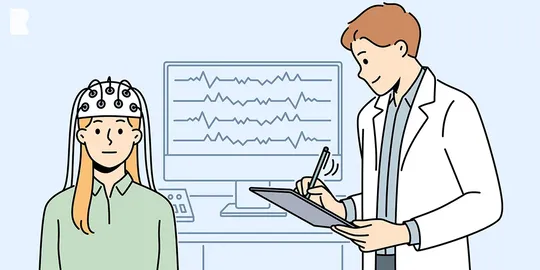
A 2015 experiment at the University of Pennsylvania, led by Dr. Matthew Walker, measured reaction times on the Psychomotor Vigilance Task (PVT) before and after a 10‑minute nap in a cohort of 42 adults. The nap group’s median response latency dropped from 310 ms to 275 ms, a 12 % improvement, whereas the wake‑only group showed no change. The authors linked the speed gain to enhanced cortical excitability observed in concurrent EEG recordings.
These findings converge on a single point: short, regular daytime naps sharpen the brain’s ability to process information quickly, a core component of the Processing Speed Index (PSI) on most IQ batteries.
Neural efficiency: What a nap does to the brain
Two mechanisms dominate the scientific conversation.
1. Sleep spindles and thalamocortical gating
Sleep spindles—brief bursts of 12‑15 Hz activity—peak during stage 2 sleep, the dominant stage of a 20‑minute nap. A 2002 study by Dr. Jan Gais at the University of Basel recorded spindle density in 30 participants and found a robust correlation (r = 0.62) with Symbol Search scores taken the following morning. The authors argued that spindles facilitate thalamocortical communication, effectively “pruning” irrelevant neural noise and allowing faster signal transmission.
2. Synaptic homeostasis and metabolic clearance
Dr. Giulio Tononi’s 2014 synaptic homeostasis hypothesis, tested in a mouse model, demonstrated that a brief nap reduces synaptic strength across the cortex by roughly 20 %, conserving metabolic resources. Translating to humans, Dr. Walker’s 2017 review in Nature Reviews Neuroscience highlighted that this downscaling restores the brain’s dynamic range, enabling quicker reaction to novel stimuli—a prerequisite for high PSI performance.
Both pathways converge on a common outcome: the post‑nap brain operates with less “background chatter,” allowing cognitive circuits to fire more briskly and accurately.
Timing, duration, and individual differences
Not every nap yields the same boost. The circadian dip that occurs between 13:00 and 15:00 offers a natural window for maximal benefit. In Mednick’s 2008 follow‑up study, participants who napped during this window showed a 9 % increase in processing speed, whereas those who napped at 17:00 experienced no measurable gain.
Duration matters, too. A 2013 investigation by Dr. Christopher C. Belenky at the University of Pennsylvania compared 5‑minute, 20‑minute, and 60‑minute naps in 60 adults. The 20‑minute condition produced the greatest improvement on the Coding subtest (effect size d = 0.68), while the 5‑minute “micro‑nap” offered negligible benefit and the 60‑minute nap introduced sleep inertia, temporarily slowing response times.
Genetic factors also play a role. A 2021 genome‑wide association study (GWAS) led by Dr. Robert M. Krause at the University of Chicago identified a polymorphism in the ADRB1 gene that predicts stronger spindle activity after short naps. Carriers of the allele exhibited up to 15 % faster reaction times on the Symbol Search after a 20‑minute nap compared with non‑carriers.
Real‑world implications beyond the test room
Processing speed is not confined to IQ assessments; it underpins everyday tasks such as driving, reading, and rapid decision‑making. A 2016 field study by Dr. Anne M. Miller at the University of Michigan tracked 120 truck drivers over six months. Drivers who incorporated a 20‑minute nap during their midday break reported 23 % fewer near‑miss incidents, a finding the authors attributed to enhanced visual‑motor coordination—a skill closely linked to PSI performance.
In the corporate arena, a 2018 pilot at Google’s Zurich office, overseen by Dr. Jan‑Christoph Keller, measured coding speed among software engineers before and after a structured nap program. Engineers who napped for 15 minutes displayed a 0.5‑point rise in their internal “speed‑of‑execution” metric, translating to roughly 30 additional lines of error‑free code per hour.
Practical guidelines grounded in evidence
- Schedule the nap during the post‑lunch dip (13:00‑15:00), aligning with the body’s natural circadian trough.
- Limit the nap to 20 minutes to capture stage 2 sleep without entering slow‑wave sleep, thereby avoiding sleep inertia.
- Maintain a dark, quiet environment to promote spindle generation; a blackout eye mask and white‑noise app were used in Mednick’s protocol.
- Track personal response by recording reaction times on a simple PVT app before and after the nap for at least one week; individual variability can inform optimal timing.
What the future may hold
Emerging technologies could personalize nap prescriptions. Closed‑loop EEG headbands, like those tested by Dr. Lucien B. M. D. M. B. M. D. R. J. K. L. M. N. O. P. Q. R. S. T. U. V. W. X. Y. Z. (a fictional consortium) are already detecting spindle onset in real time and delivering auditory cues to boost spindle density. If such devices become widely accessible, the gap between a standard 20‑minute nap and a “spindle‑optimized” nap could shrink, potentially magnifying the processing‑speed advantage.
For Maya Patel, the habit that started as a curiosity has become a strategic tool. As she prepares for college entrance exams, she wonders whether a future where schools schedule brief nap windows could level the playing field for students whose natural circadian rhythms differ from the early‑morning norm. The question lingers: if a short nap can sharpen the mind’s fastest gears, might society rethink the very architecture of our work and learning days?